


Advantages and Disadvantages of Cogeneration (CHP)
Cogeneration and Combined Heat and Power (CHP) both refer to systems that simultaneously produce electricity and thermal energy from a single energy source. By recovering waste heat generated during power production, overall energy efficiency is significantly improved.
Although the core concept is the same, the terminology differs slightly depending on the region and application:
- Cogeneration: Commonly used in industrial sectors and Taiwan, emphasizing the combined supply of steam and electricity.
- Combined Heat and Power (CHP): Internationally recognized term, covering a broader range of thermal applications such as steam, hot water, and air conditioning.
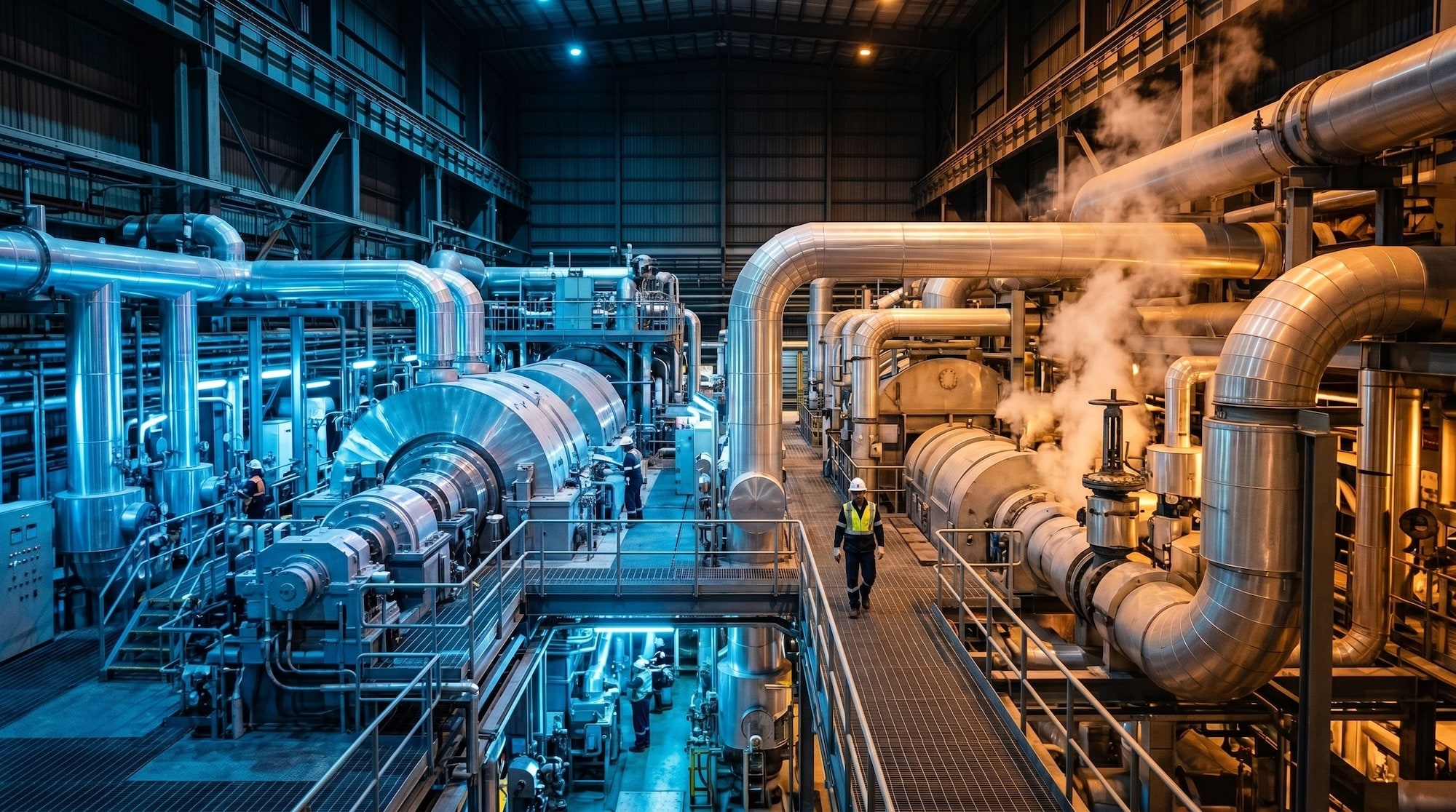
System Advantages: High Efficiency and Reduced Costs
By recovering and reusing waste heat from power generation systems, CHP provides the following key advantages:
- High energy efficiency: Overall system efficiency is significantly higher than conventional power generation due to waste heat recovery.
- Lower energy costs: A single fuel source produces both electricity and heat, reducing fuel consumption and external electricity procurement.
- Strong carbon reduction performance: Improved energy utilization supports lower CO₂ emissions and ESG goals.
- Improved power stability: Acts as a self-generation system, reducing dependence on external grids.
- Diverse waste heat utilization: Steam, hot water, air conditioning, and process heating can be supplied, increasing overall value.
Implementation Challenges: High Initial Investment and System Complexity
- Despite its significant benefits, several technical and operational challenges must be considered when planning implementation:
- High initial investment: Integration of power generation, heat recovery, and control systems increases capital cost.
- Complex system design: Requires precise matching of electrical and thermal energy demand, increasing engineering complexity.
- Higher maintenance requirements: Multiple subsystems require professional operation and maintenance teams.
- Application limitations: Efficiency decreases if thermal demand is insufficient.
- Fuel price sensitivity: Operating costs are affected by fluctuations in fuel prices (natural gas, diesel, heavy fuel oil).
Project Conclusion: Waste Heat Recovery for Sustainable Energy Planning
Cogeneration and CHP systems are essentially high-efficiency integrated energy solutions centered on electricity generation combined with waste heat recovery.
Their key value lies in improving energy efficiency, reducing operational costs, and lowering carbon emissions. However, stable thermal demand and proper system design are essential to maximize performance and overall benefits.